News
How GTA 6's Six-Star Wanted System Works
Six stars instead of five, and a bigger change behind it: the police now have to identify you first. Stars can appear empty, which means they are looking for someone without knowing who.
Published Last verified
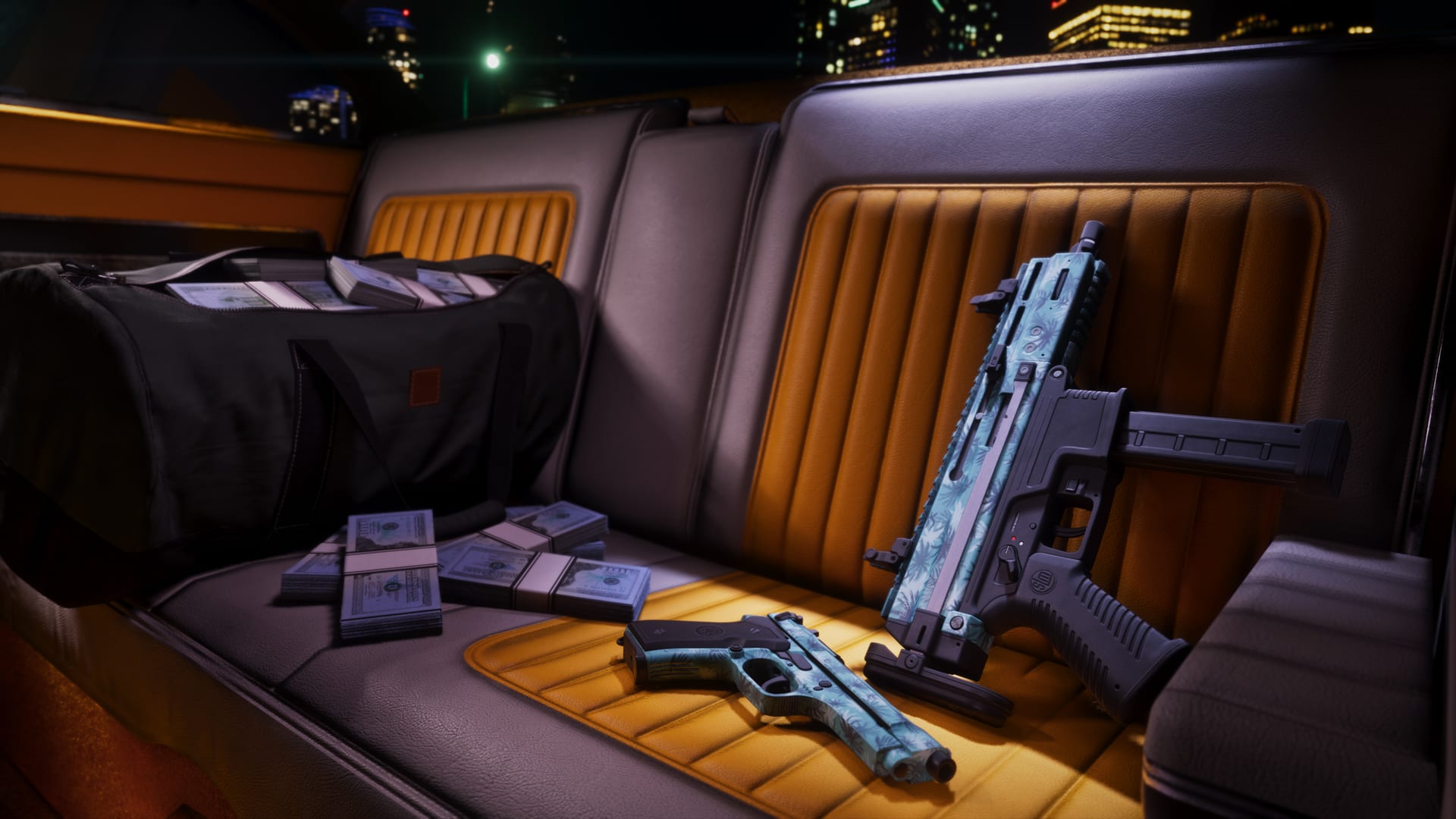
Image: Rockstar Games
The wanted system returns with six stars rather than GTA 5's five. That is the headline change, and it is the less interesting one.
The real change is that being wanted now depends on what the police know about you.
Crime first, then a report
Police do not react the moment you commit a crime. They react once the crime is reported.
The information comes from witnesses and alarms. What reaches the police is a description: your appearance, your clothing, your vehicle.
That one shift turns the wanted system from a timer into something closer to an investigation. In GTA 5, stars appeared because you did something. Here, stars appear because somebody told someone.
Empty stars
Stars can show as empty.
An empty star means the police are searching without a full identification. They know a crime happened and roughly who they are looking for, but they do not have you pinned.
This is where the system opens up. Masks, a change of clothes and a change of vehicle become actual escape tools rather than cosmetic choices, because each one breaks a piece of the description that is circulating.
Your trunk is part of it
Weapons and spare clothes are stored in your car's trunk.
Read alongside the identification system, that is not storage for its own sake. It is the preparation step before a job, and the change-your-appearance step during a getaway.
It also sits with the carrying limit, which follows RDR2: two long guns and two sidearms on your person, the rest in the vehicle. Walking around with a rocket launcher, three rifles and a minigun at once is over.
Criminal Profile
A separate system, Criminal Profile, tracks how you behave across the game.
Rockstar's comparison point is RDR2's honour system, but this is not a simple good-to-bad slider. Circumstances are weighed. Violence that belongs to the story is counted differently from violence for its own sake.
Exactly what the profile affects has not been detailed.
This connects to how crime works generally
Robberies do not require a mission marker. Any shop can be robbed.
Bigger opportunities are found rather than assigned — through NPC conversations, story events, exploration and tip-offs. The Focus system highlights useful objects and openings while you explore, and Rockstar has deliberately left events off the map so that conversations and odd situations turn into activities on their own.
Put together with the identification system, the picture is consistent: the game wants you to decide when to draw attention, and gives you ways to shed it afterwards.
Vehicles have their own locks
Cars have protection levels. Older ones open with a slim jim; newer ones need a key cloner.
Some cars cannot be stolen early on at all — the tools unlock as you progress.
The WAINK app scans a parked car and shows its value, the cost of registering it to yourself, whether it is locked, and whether it has an alarm or a tracker. Damage lowers what you get when selling.
What is not known
What Criminal Profile actually changes. Rockstar has described the system but not its consequences.
Whether six stars means a new tier of response or a re-spread of the existing one.
How long heat lasts, and what clears it besides breaking the description.
Sources
- Rockstar Games, Grand Theft Auto VI: An Extended Look, 27 August 2026 — wanted system, Criminal Profile, robbery structure, Focus
- Rockstar Games official gameplay coverage — WAINK, vehicle protection levels, carrying limits